
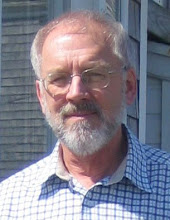
Kendon Clark, a descendant of William Maley, reminded me of a tradition within the Maley family that I did not write about. What I did write is that during the Texas Revolution David Kokernot rushed his family to Galveston and placed them on a New Orleans bound schooner for safety as the war threatened their home on the San Jacinto River. His mother-in-law, Juliane; wife, Caroline; two toddler daughters; and sixteen year old brother-in-law William Maley went to New Orleans. Only William's fourteen-year-old brother George remained in Texas. In New Orleans the family stayed with David's brother, Louis, who lived with their mother. There Caroline gave birth to the couple's first son, L. M., in June. The whole family returned to Texas, probably in July.
Maley family oral history holds that Juliane did not go to New Orleans, or that she returned early, and helped the war effort by nursing the wounded, feeding soldiers, or providing a wagon and oxen, depending on the account. Some accounts suggest that the two land grants she received were rewards for her service. Another suggests that William, too, remained behind in Texas. These stories are persistent and seem reliable, because they come from Maleys who heard them second hand, rather than third or fourth hand. Yet I discount them and wrote my account as I did because they contradict better evidence, and because there is another explanation for them.
David Kokernot writes about these days before and after the battle in his Reminiscences of 2 Nov 1878, which are reprinted on pages 183-188 of my book. He does not explicitely say who went to New Orleans, only that "Fortunately we found a vessel ready to sail for New Orleans, and we put our families aboard of the schooner, which conveyed them in safety to the city." His description of his subsequent activities in Texas does not mention any of his family members besides George Maley. David's Reminiscences are unreliable, but his errors always seem to be ones of self-aggrandizement or of detail, such as dates or names. Since the Juliane story would be neither, I am inclined to believe that David was saying that only he and George stayed behind.
Customs records in New Orleans are very complete and would include a passenger list showing the family members arriving there. Unfortunately, the Koscuisko, the only vessel which traveled from Texas to New Orleans in the correct time frame, evaded customs. Only the port log, published in the newspaper, documents its arrival. For the return journey to Texas, there are no port logs or customs records available for these months in the newborn Republic.
The weeks before the Battle of San Jacinto were a time of panic for civilians fleeing the approach of the Mexican Army. Some families stayed behind, but it seems logical that Juliane would want to accompany her seven-month-pregnant daughter to New Orleans to care for her until well after her son's birth on June 6. They may not have known it before their arrival in New Orleans, but David's mother was not there. She had gone to New York to marry Alexander Hart, making it less likely that Juliane would leave Caroline without either mother present for her lying-in. Protecting their Texas home or aiding the war effort would seem like insufficient motivation.
Juliane's two land grants were not rewards for service. As a widow with a family, Juliane was entitled to the same headright as a man under Mexican law--a league and a labor, that is, 4428 plus 177 acres. She received her headright league on August 19, 1835, as described on pages 58-60. It straddled Cedar Bayou near the league David received at the same time, about twenty miles from their home on the San Jacinto River. Neither of them lived on or used the land and they both sold their leagues to James Morgan less than six months later (page 62). The Republic of Texas honored the same headright obligations as Mexico and in 1838 granted Juliane a certificate for the labor she had not received earlier. In 1839 her acreage was surveyed in the Cove area and was formally patented in 1847, probably by her son William, since Juliane was already dead and George was in Gonzales County.
Another piece of evidence argues that Juliane did not stay, or return early to Texas. In 1894, Juliane's children tried to reclaim by lawsuit the league she had sold to James Morgan in 1836, arguing that Juliane had not consented to the sale, despite four witnesses to the contract. The lawsuit file (pages 243-244) contains several interesting depositions, including one by Caroline describing their flight to New Orleans. She said "My mother and me went back to New Orleans and stayed while the war was going on in Texas, and after it was over we all came back to Texas...My son L. M. Kokernot was about one month old when we came back from New Orleans" (pages 82 and 226). Additional depositions reveal other interesting, but unrelated, assertions: William and George had a brother who died in Philadelphia, and their father, George Sr., died in Philadelphia before the family left for Texas, not en route as most Maley descendants have written.
If Juliane was in New Orleans just before and after the Battle of San Jacinto, what is the source for the stories of her aiding soldiers? As it turns out, she did aid the war effort after her return. A German mining engineer, Eduard Harkort, was assigned by James Morgan the task of fortifying the Galveston waterfront against an expected Mexican attack after San Jacinto. Harkort was scouring the countryside for timber to haul to Galveston. His diary has been published, but it ends abruptly on July 17 while he was searching and mapping Galveston Bay in the vicinity of Edwards Point. He had taken ill and died of yellow fever three weeks later, on August 11, at the Kokernots' home nearby. He had doubtless been nursed in his final days by Juliane Maley. Harkort came from Westphalia, only a hundred miles from Juliane's birthplace in Hesse Kassel in today's Germany. Imagine the comfort Juliane provided Harkort, a fellow countryman who spoke the same German dialect as she. Imagine also, the stories Juliane told her children and grandchildren about nursing the sick victim, Eduard Harkort.
Wednesday, June 20, 2012


Sunday, June 10, 2012
Kokernot Cattle Brands

Cattle brands almost always tell a story, and the Kokernots' brands are no exception. Within a couple of weeks of the family's 1853 arrival in Gonzales County, David Kokernot registered his cattle brands at the courthouse. For his own brand, he chose his wife's initials, "CK." She, in turn, chose his initials, "LK." Why?
All the cattle they brought from Colorado County carried the "CK" brand. Caroline claimed them as her separate property--an inheritance from her mother--and thus beyond the reach of David's creditors. Perhaps because he had no creditors yet in Gonzales County, David registered them in his own name. The "LK" brand was newly available because P. L. Kessler had claimed it in 1848 and failed to renew the registration. At that time, one person could only register a single brand, so Caroline Kokernot grabbed the "LK" brand.
Their seventeen-year-old son L. M. had registered his brand in Colorado County at age fifteen and doubtless brought a few head to Gonzales. "LK" would be a natural choice for him, so he registered it, but with the "L" reversed, as shown above. Over the decades, that brand would appear on the rumps of hundreds of thousands of cattle all over Texas, Indian Territory, Kansas, and Wyoming.
Saturday, May 26, 2012
David Kokernot Now Available!

The major retailers, including Amazon, will not ship orders until June 15 or July 1 to allow time for the supply pipeline to fill and for the pre-publication reviewers to do their thing, if they choose to. Barnes and Noble is taking pre-orders at $18.18, which is a very good price, since full retail is $26.95. Your favorite book retailer should be able to order you a copy, too, since most have an account at Ingram. If you want immediate shipment I am selling copies at the publisher website for the Barnes and Noble price. You'll need an Amazon account and shipment will be by USPS Priority mail.
Wednesday, May 2, 2012
What do Theodore Clapp, Congo Square, and galjoots have in common?

Indexing is surprisingly difficult. The indexer must place himself in the mind of the reader to imagine the information he would seek and the terms he would use to find it. The author is probably the least able to do this, especially if he has worked a decade writing the book. I tried it, quickly gave up, and hired a professional indexer, Melody Englund, to do it. Take a look. I'm sure you will agree she did an excellent job.
Friday, April 6, 2012
Gulp!
Yesterday I mailed a box to McNaughton & Gunn, my printer. It contained a paperback version  of David Kokernot and rolled-up proofs of its dust jacket and endsheets, each with my approval signature across the front. In six weeks or so, finished books will arrive at Kullyspel Press's loading dock (aka my garage).
I have always been fascinated by the process of publishing books--their editing, design, manufacturing, marketing, and distribution. This is the manufacturing step. The book is being printed on an offset press, which has very high setup costs but also high quality in the final product. It is not practical to print proofs on an offset press, so the interior of the book was proofed on a digital press (like a large laser printer with binding capability) and the jacket and endsheets on a large inkjet printer tuned to mimic the colors of the offset press. My signature on the interior proof signified there were no formatting or assembly errors and on the inkjet prints that the colors were what I wanted.
 of David Kokernot and rolled-up proofs of its dust jacket and endsheets, each with my approval signature across the front. In six weeks or so, finished books will arrive at Kullyspel Press's loading dock (aka my garage).
I have always been fascinated by the process of publishing books--their editing, design, manufacturing, marketing, and distribution. This is the manufacturing step. The book is being printed on an offset press, which has very high setup costs but also high quality in the final product. It is not practical to print proofs on an offset press, so the interior of the book was proofed on a digital press (like a large laser printer with binding capability) and the jacket and endsheets on a large inkjet printer tuned to mimic the colors of the offset press. My signature on the interior proof signified there were no formatting or assembly errors and on the inkjet prints that the colors were what I wanted.
Wednesday, February 1, 2012
Real soon now...

It is a humbling experience. The first time an editor returns an author's precious words to him with a few suggestions and comments, and he finds the first page covered in red blood. Fortunately for me, this was not my first time. Defensive instincts still rise, but when you have a good editor like I do--Kathy Carter--it's easy to overcome them and dig in, searching for solutions to the problems posed by the editor. With my first draft, shown here, those problems were pretty massive. Their solutions required rearranging chapters, chopping much text, and writing new text (preceded by new research).

The second draft, offered after a year of rewriting, came back with less red blood, and the third had even less. Only after three passes of editing did I engage a book designer (Fiona Raven) to create the shape of the book itself--the fonts, the page layouts, the positioning and appearance of photos and maps--and the crucial front cover. As of today, the book has been typeset to Fiona's specifications and a second editor is proofreading it (Kathy and I have both seen it so many times we're blind to any remaining errors). After proofreading a professional indexer will do his magic. Then, finally, printing. Expect the final product in June.
Sunday, November 27, 2011
Kokernot's Reminiscences November 2, 1878
David Kokernot's Reminiscences were published in the Gonzales Weekly Inquirer as five letters to the editor in 1878. Some were published again by the Inquirer in 1923, and the text of the first four is available online. Since these memoirs are the source of much misinformation propagated about Kokernot--information that my biography corrects--I am including their text as an appendix in that biography. The fifth installment was difficult to find. That issue of the Inquirer is missing from the collection at UT's Center for American History and is not included in any of the online transcriptions that I have seen. I found the November 2, 1878, issue on microfilm at the Gonzales City Library and include the transcription here. So far as I know, this is the first time it has been published since 1878.
November 2, 1878
During the time our command under Gen. Sherman lay at DeVese’s ford, we found a large lot of fine cotton bagging, which we gave to destitute families for tents. We also gave them bacon, corn and other provisions, as they were destitute of almost everything. On the morning of March 20, Gen. Sherman told me that on the previous night he had received orders from Gen. Houston to destroy all provisions in the rear, and to meet him in the edge of the timber on the Colorado—which order was promptly obeyed. On the following morning we started on the retreat to the Brazos. After a toilsome march over the worst of roads, we reached San Phillipi [San Felipe] on the west side of the river, on the next day. Many times during that march Gen. Houston dismounted to help get the wagons out of the bog. Taking the lead he would remark: “Gentlemen, get down and put your shoulders to the wheel.” Although it continued to rain in torrents, on the next day we took up the line of march for Mill Creek. On account of the rain, which continued to pour down in torrents during the day and night, we could cook nothing, so, tired and hungry, I took off my saddle and sat on it all night, having covered my head with my blanket. No tongue can tell, or pen describe, the sufferings which the poor women and children were called to endure on this retreat.
On the thirty-first the little army moved forward to Gross’s ferry [Groce’s Ferry], and camped at the edge of the river timber. On the following morning I met my old friend, Capt. Ross, of the steamboat Yellow Stone, then loading with cotton at the landing. Here we lost one of our brave companions, named Moore, which was the first death that had occurred on the campaign. Gen. Houston ordered the army to move into the Brazos bottom, with the view of securing a safe encampment. The bottom was thickly matted with cane, briars and grape vines, and it required the whole army to go to work to clean off a place for our camp. I had a very fine, broad, two-edged, Turkish sword, with which I went to cutting down cane and briars. I came to a large grape vine, which I struck a pretty heavy blow, but the sword being very sharp and heavy, went through the vine and flew out of my hand into my leg, inflicting a severe and painful wound. That was the only wound I received during the entire war of the revolution.
A courtmartial in the bottom.
A young man named Gardener, becoming anxious to know what had become of his mother and the rest of his family, deserted and started in search of them, but was soon captured, brought back and tried by courtmartial, and condemned to death. On the day after the trial, he was marched out to be shot. It was a melancholy sight, to see a fine looking young man kneeling on his coffin beside the opened grave, while twelve men stood ready with their rifles to fire at the word of command. He was blindfolded, and the officer gave the command, “Shoulder arms! Present arms! Make ready! Take aim!” Just at this moment Gen. Houston raised his white handkerchief in token of pardon. Then the officer went up to the condemned man and told him that the general had pardoned him. “Well,” said he, in a loud voice accompanied with an oath, “I was never so much disappointed in my life!” The young man afterwards made a faithful soldier, fought at San Jacinto, and his name now stands on the roll of honor.
A general order was read, forbidding any man to fire a gun under the penalty of being courtmartialed. Our arms being in very bad order, owing to exposure to the heavy rains, few of them would have fired in case the enemy had made an attack. A man by the name of Donman said he would set his head to work to fall upon some device by which to get our guns cleaned and put in order for use. At that time the river had risen so high that the water surrounded our encampment. Donman went walking along by the side of the water, carrying his trusty rifle, when presently he espied a very large alligator swimming near the edge of the land, and walking up to Gen. Houston, he said: “General, look at that fellow yonder!” The general obeyed the orders of his shrewd private, and seeing the huge monster, under the excitement of the moment, exclaimed, “Give me your gun!” The order was obeyed instanter, when the general blazed away at the eye of the alligator with effect. In five minutes afterwards the woods resounded with the reports of fire arms. Donman’s device had accomplished its purpose, greatly to the gratification and amusement of the whole army.
Gen. M. B. Lamar fell in love with my Turkish sword, and offered to purchase it, but I refused to sell it, and then presented it to him. With this sword the general fought in the battle of San Jacinto. It is probably preserved as a memento in the Lamar family.
On April 13 some of our spies came in and reported that the Mexican cavalry were crossing the river at Fort Bend. At 10 o’clock that night Gen. Houston sent for me. I went without delay. The general asked me if my horse was at hand; I answered he is. He then told that he wished me to saddle up in double quick and report. I received my orders and an express to President David Burnet, who, with his Cabinet, was then at Harrisburg. I was ordered to travel with all possible speed, as the preservation of the archives of the government depended upon my speed—the enemy’s cavalry being then on the way to Harrisburg. In the night at half past 10 o’clock I crossed the river at Gross’s ferry and rode on till 3 o’clock a. m., when I met Col. W. T. Austin and Capt. Smith with two small pieces of cannon, known as the Twin Sisters, taking them to the army. I told Col. Austin of the whereabouts of the Mexican cavalry, and that as my horse was about to give out, he must let me have the best horse he had. He ordered one of his men to bring up the black horse. When the horse came I threw my saddle on him and was off in a trice, traveling at the rate of ten miles per hour. At half past nine o’clock a. m. I delivered my dispatches to the president at Harrisburg—having traveled between 80 and 90 miles in twelve hours. The president ordered the captain of the little steamer Cayuga to raise steam, and get all the women and children, together with the government, aboard of the boat as soon as possible. Before the president left he gave me a furlow for four days, to go and visit my family, which was 15 miles below Harrisburg.
I will now tell your readers how Santa Anna got hold of the famous black horse called Quicksilver. When Capt. Smith went on with the Twin Sisters he pressed this horse, which was the property of Allen Vince, into service. About five miles below Harrisburg is Vince’s bridge, the same which Gen. Houston ordered to be burned before the battle. When I reached the bridge Vince came out and demanded his horse. I told him I must have the horse to ride home; but he said he could not let me keep him, but would furnish one in his place. Just then a black boy belonging to Gen. Houston rode up, leading two horses for the general. I told him he could not go any farther, as the Mexicans were not far off, and he must go back with me. I threw my saddle on one of those horses, and left Mr. Vince for home. But in less than an hour the enemy came down upon Mr. Vince, and captured him and horse and all on the place.
When I got to Lynchburg, at the mouth of the San Jacinto, I found the place alive with women and children seeking to cross the river on the east side. I reached home after dark, and there found our vice president, Gen. Lorenzo de Zavalla, and family. I told him to make himself comfortable, as there was no danger where he was—the advance guard of the enemy being behind us on the opposite side of the river, and that I had good boats. On the next morning I went to work to put my boats in good order for sailing at a moment’s warning. I also had a skiff put on a large slide, so that in case we could not get down the bay we might retreat by land, and launch our skiff into the first river or bay we could reach. On April 17, at day light, Mr. Lynch came to my house and told us that the enemy was crossing the river at Lynchburg, and that his family had all gone into the salt marsh, and he wanted help to get them out. He was badly scared, and his report alarmed my family and the vice president’s. I then went to work and got the general and his family aboard of one boat, and my own aboard of the other. Mr. John Imes took charge of the first boat, while two youths, brothers-in-law of mine, took charge of the other. I ordered them to take the boats around to the mouth of Goose Creek and await my coming, while I should go and spy out the enemy.
After having gone all the way to Lynchburg, I found that some of the enemy had crossed the river; but I saw some twenty or thirty white men on Tory Hill, and knowing that they were enemies, I went no further. After the battle a list was found with Santa Anna of all the names of this gang. I then returned to Goose Creek, and took charge of the boats. The enemy had reached New Washington, about a mile and a half across the bay. We could see them riding to and fro. We ran out into the bay, and at about 3 o’clock the steamer Cayuga came in sight, and in a very short time we ran out and put all our passengers on board, telling the captain that the Mexicans were then on the point. He turned and went back to Galveston Island. Fortunately we found a vessel ready to sail for New Orleans, and we put our families aboard of the schooner, which conveyed them in safety to the city.
In company with my brother-in-law, George Maley, I returned to Buffalo Bayou. This was on the morning of the twenty-first of April. Going out to see what had become of the enemy, to my surprise I fell into the encampment of our own army, and reported at once to Gen. Houston. In the afternoon the enemy was drawn up into line of battle. Our regiment, under the command of Gen. Sidney Sherman, was stationed on the left. Gen. Houston made a short talk to the men, as did Gen. Thomas J. Rusk, our secretary of war. Then came the order, “forward, march!” We advanced to within about two hundred yards of the enemy’s breastworks. At this juncture Deaf Smith rode up to the general and informed him that the bridge was burned; and the word was passed around to the entire army. By this time the enemy opened fire upon us with their scopets and cannon. Then the word was given, “Charge!” and such a charge has seldom if ever been made—without bayonets! As the brave and desperate Texans rushed like enraged tigers upon the foe, the welkin rang with the sound of the watchwords, “Remember the Alamo! Remember Goliad!” In about twenty minutes the enemy fled in every direction, and the victorious little army of the Lone Star Republic was in full possession of the field. From that time till dark our men continued to pursue the Mexicans and slay them without mercy. Between 700 and 900 were killed, and about as many prisoners taken, while only seven men were killed on our side.
On the twenty-fourth Gen. Houston sent for me to come to his tent, which order was forthwith obeyed. I found him lying on a pallet in his tent, wounded by a shot from the enemy in the battle. As I walked in he told me he wanted me to take fifty men and go to the other side of the San Jacinto and on to the Trinity, and capture John A. Williams and a party of Tories. I told the general that I preferred that he would send somebody else, as that was in my neighborhood, those men were my neighbors, and if I should capture them it would cause them [to harbor] feelings of hatred and reven[ge agains]t myself and family. He repl[ied, “You m]ust go,” and as an officer in [the regular] army I was bound to obey. [He gave] me a list of their names, [which had] been found with Santa Anna [...] This list is now on record in [the office of] the adjutant general at A[ustin. I ca]led for volunteers, and in [...] I had as many as I needed. [...] brave men have passed the [...] save the following: My old friend C. A. Ogsbury, of the Cuero Bulletin, John Imes, of the City of Houston; George Maley, of Refugio county; and Mr. McAlister, of San Francisco, California. On the twenty-fifth I crossed the river to execute my orders. In less than ten days I drove every Tory out of Texas into Louisiana, save a few captives who were sent to headquarters. We had no little sport in that expedition, chasing the cowards over the prairies.
On the night of the twenty-eighth I stopped at Rector’s, on old river of the Trinity, my headquarters being at Solomon Barrer’s on the bay shore. At daylight I started back to headquarters, and at the head of Cotton Bayou I saw one of the gang who was mounted on a very fine horse, and well armed. I was mounted on my celebrated Tory horse. I immediately gave chase, the man being some five hundred yards ahead of me. We had an exciting chase for six miles, till he struck the timber of Cedar Bayou, when I gave up as I did not wish to follow him into the timber. He was the same Tory whom I had captured in ’32, carrying provisions to the enemy at Anahuac. The reason I do not mention the names of these men is on account of their children, who still live in Texas, and are good citizens.
I now received orders to take all the property belonging to the Tories, such as horses, cattle and negroes, as it had been confiscated.
About this time Gen. Houston left for New Orleans, and our Tory work was about finished for the present. The seat of government having been moved to Velasco, at the mouth of the Brazos river, I was ordered to report to the secretary of the navy, which I did. I was ordered to go on the schooner Terrible, Capt. Allen, as captain of marines, which was to start on a cruise down the coast of Mexico, with the view of capturing all Mexican vessels. Time and space at present do not allow me to give all the particulars of this expedition; let it suffice that we captured two vessels as prizes, and sent them to Galveston Island, and after a two month’s cruise we returned to Velasco.
Providence permitting, I shall resume these reminiscences at an early day.
November 2, 1878
During the time our command under Gen. Sherman lay at DeVese’s ford, we found a large lot of fine cotton bagging, which we gave to destitute families for tents. We also gave them bacon, corn and other provisions, as they were destitute of almost everything. On the morning of March 20, Gen. Sherman told me that on the previous night he had received orders from Gen. Houston to destroy all provisions in the rear, and to meet him in the edge of the timber on the Colorado—which order was promptly obeyed. On the following morning we started on the retreat to the Brazos. After a toilsome march over the worst of roads, we reached San Phillipi [San Felipe] on the west side of the river, on the next day. Many times during that march Gen. Houston dismounted to help get the wagons out of the bog. Taking the lead he would remark: “Gentlemen, get down and put your shoulders to the wheel.” Although it continued to rain in torrents, on the next day we took up the line of march for Mill Creek. On account of the rain, which continued to pour down in torrents during the day and night, we could cook nothing, so, tired and hungry, I took off my saddle and sat on it all night, having covered my head with my blanket. No tongue can tell, or pen describe, the sufferings which the poor women and children were called to endure on this retreat.
On the thirty-first the little army moved forward to Gross’s ferry [Groce’s Ferry], and camped at the edge of the river timber. On the following morning I met my old friend, Capt. Ross, of the steamboat Yellow Stone, then loading with cotton at the landing. Here we lost one of our brave companions, named Moore, which was the first death that had occurred on the campaign. Gen. Houston ordered the army to move into the Brazos bottom, with the view of securing a safe encampment. The bottom was thickly matted with cane, briars and grape vines, and it required the whole army to go to work to clean off a place for our camp. I had a very fine, broad, two-edged, Turkish sword, with which I went to cutting down cane and briars. I came to a large grape vine, which I struck a pretty heavy blow, but the sword being very sharp and heavy, went through the vine and flew out of my hand into my leg, inflicting a severe and painful wound. That was the only wound I received during the entire war of the revolution.
A courtmartial in the bottom.
A young man named Gardener, becoming anxious to know what had become of his mother and the rest of his family, deserted and started in search of them, but was soon captured, brought back and tried by courtmartial, and condemned to death. On the day after the trial, he was marched out to be shot. It was a melancholy sight, to see a fine looking young man kneeling on his coffin beside the opened grave, while twelve men stood ready with their rifles to fire at the word of command. He was blindfolded, and the officer gave the command, “Shoulder arms! Present arms! Make ready! Take aim!” Just at this moment Gen. Houston raised his white handkerchief in token of pardon. Then the officer went up to the condemned man and told him that the general had pardoned him. “Well,” said he, in a loud voice accompanied with an oath, “I was never so much disappointed in my life!” The young man afterwards made a faithful soldier, fought at San Jacinto, and his name now stands on the roll of honor.
A general order was read, forbidding any man to fire a gun under the penalty of being courtmartialed. Our arms being in very bad order, owing to exposure to the heavy rains, few of them would have fired in case the enemy had made an attack. A man by the name of Donman said he would set his head to work to fall upon some device by which to get our guns cleaned and put in order for use. At that time the river had risen so high that the water surrounded our encampment. Donman went walking along by the side of the water, carrying his trusty rifle, when presently he espied a very large alligator swimming near the edge of the land, and walking up to Gen. Houston, he said: “General, look at that fellow yonder!” The general obeyed the orders of his shrewd private, and seeing the huge monster, under the excitement of the moment, exclaimed, “Give me your gun!” The order was obeyed instanter, when the general blazed away at the eye of the alligator with effect. In five minutes afterwards the woods resounded with the reports of fire arms. Donman’s device had accomplished its purpose, greatly to the gratification and amusement of the whole army.
Gen. M. B. Lamar fell in love with my Turkish sword, and offered to purchase it, but I refused to sell it, and then presented it to him. With this sword the general fought in the battle of San Jacinto. It is probably preserved as a memento in the Lamar family.
On April 13 some of our spies came in and reported that the Mexican cavalry were crossing the river at Fort Bend. At 10 o’clock that night Gen. Houston sent for me. I went without delay. The general asked me if my horse was at hand; I answered he is. He then told that he wished me to saddle up in double quick and report. I received my orders and an express to President David Burnet, who, with his Cabinet, was then at Harrisburg. I was ordered to travel with all possible speed, as the preservation of the archives of the government depended upon my speed—the enemy’s cavalry being then on the way to Harrisburg. In the night at half past 10 o’clock I crossed the river at Gross’s ferry and rode on till 3 o’clock a. m., when I met Col. W. T. Austin and Capt. Smith with two small pieces of cannon, known as the Twin Sisters, taking them to the army. I told Col. Austin of the whereabouts of the Mexican cavalry, and that as my horse was about to give out, he must let me have the best horse he had. He ordered one of his men to bring up the black horse. When the horse came I threw my saddle on him and was off in a trice, traveling at the rate of ten miles per hour. At half past nine o’clock a. m. I delivered my dispatches to the president at Harrisburg—having traveled between 80 and 90 miles in twelve hours. The president ordered the captain of the little steamer Cayuga to raise steam, and get all the women and children, together with the government, aboard of the boat as soon as possible. Before the president left he gave me a furlow for four days, to go and visit my family, which was 15 miles below Harrisburg.
I will now tell your readers how Santa Anna got hold of the famous black horse called Quicksilver. When Capt. Smith went on with the Twin Sisters he pressed this horse, which was the property of Allen Vince, into service. About five miles below Harrisburg is Vince’s bridge, the same which Gen. Houston ordered to be burned before the battle. When I reached the bridge Vince came out and demanded his horse. I told him I must have the horse to ride home; but he said he could not let me keep him, but would furnish one in his place. Just then a black boy belonging to Gen. Houston rode up, leading two horses for the general. I told him he could not go any farther, as the Mexicans were not far off, and he must go back with me. I threw my saddle on one of those horses, and left Mr. Vince for home. But in less than an hour the enemy came down upon Mr. Vince, and captured him and horse and all on the place.
When I got to Lynchburg, at the mouth of the San Jacinto, I found the place alive with women and children seeking to cross the river on the east side. I reached home after dark, and there found our vice president, Gen. Lorenzo de Zavalla, and family. I told him to make himself comfortable, as there was no danger where he was—the advance guard of the enemy being behind us on the opposite side of the river, and that I had good boats. On the next morning I went to work to put my boats in good order for sailing at a moment’s warning. I also had a skiff put on a large slide, so that in case we could not get down the bay we might retreat by land, and launch our skiff into the first river or bay we could reach. On April 17, at day light, Mr. Lynch came to my house and told us that the enemy was crossing the river at Lynchburg, and that his family had all gone into the salt marsh, and he wanted help to get them out. He was badly scared, and his report alarmed my family and the vice president’s. I then went to work and got the general and his family aboard of one boat, and my own aboard of the other. Mr. John Imes took charge of the first boat, while two youths, brothers-in-law of mine, took charge of the other. I ordered them to take the boats around to the mouth of Goose Creek and await my coming, while I should go and spy out the enemy.
After having gone all the way to Lynchburg, I found that some of the enemy had crossed the river; but I saw some twenty or thirty white men on Tory Hill, and knowing that they were enemies, I went no further. After the battle a list was found with Santa Anna of all the names of this gang. I then returned to Goose Creek, and took charge of the boats. The enemy had reached New Washington, about a mile and a half across the bay. We could see them riding to and fro. We ran out into the bay, and at about 3 o’clock the steamer Cayuga came in sight, and in a very short time we ran out and put all our passengers on board, telling the captain that the Mexicans were then on the point. He turned and went back to Galveston Island. Fortunately we found a vessel ready to sail for New Orleans, and we put our families aboard of the schooner, which conveyed them in safety to the city.
In company with my brother-in-law, George Maley, I returned to Buffalo Bayou. This was on the morning of the twenty-first of April. Going out to see what had become of the enemy, to my surprise I fell into the encampment of our own army, and reported at once to Gen. Houston. In the afternoon the enemy was drawn up into line of battle. Our regiment, under the command of Gen. Sidney Sherman, was stationed on the left. Gen. Houston made a short talk to the men, as did Gen. Thomas J. Rusk, our secretary of war. Then came the order, “forward, march!” We advanced to within about two hundred yards of the enemy’s breastworks. At this juncture Deaf Smith rode up to the general and informed him that the bridge was burned; and the word was passed around to the entire army. By this time the enemy opened fire upon us with their scopets and cannon. Then the word was given, “Charge!” and such a charge has seldom if ever been made—without bayonets! As the brave and desperate Texans rushed like enraged tigers upon the foe, the welkin rang with the sound of the watchwords, “Remember the Alamo! Remember Goliad!” In about twenty minutes the enemy fled in every direction, and the victorious little army of the Lone Star Republic was in full possession of the field. From that time till dark our men continued to pursue the Mexicans and slay them without mercy. Between 700 and 900 were killed, and about as many prisoners taken, while only seven men were killed on our side.
On the twenty-fourth Gen. Houston sent for me to come to his tent, which order was forthwith obeyed. I found him lying on a pallet in his tent, wounded by a shot from the enemy in the battle. As I walked in he told me he wanted me to take fifty men and go to the other side of the San Jacinto and on to the Trinity, and capture John A. Williams and a party of Tories. I told the general that I preferred that he would send somebody else, as that was in my neighborhood, those men were my neighbors, and if I should capture them it would cause them [to harbor] feelings of hatred and reven[ge agains]t myself and family. He repl[ied, “You m]ust go,” and as an officer in [the regular] army I was bound to obey. [He gave] me a list of their names, [which had] been found with Santa Anna [...] This list is now on record in [the office of] the adjutant general at A[ustin. I ca]led for volunteers, and in [...] I had as many as I needed. [...] brave men have passed the [...] save the following: My old friend C. A. Ogsbury, of the Cuero Bulletin, John Imes, of the City of Houston; George Maley, of Refugio county; and Mr. McAlister, of San Francisco, California. On the twenty-fifth I crossed the river to execute my orders. In less than ten days I drove every Tory out of Texas into Louisiana, save a few captives who were sent to headquarters. We had no little sport in that expedition, chasing the cowards over the prairies.
On the night of the twenty-eighth I stopped at Rector’s, on old river of the Trinity, my headquarters being at Solomon Barrer’s on the bay shore. At daylight I started back to headquarters, and at the head of Cotton Bayou I saw one of the gang who was mounted on a very fine horse, and well armed. I was mounted on my celebrated Tory horse. I immediately gave chase, the man being some five hundred yards ahead of me. We had an exciting chase for six miles, till he struck the timber of Cedar Bayou, when I gave up as I did not wish to follow him into the timber. He was the same Tory whom I had captured in ’32, carrying provisions to the enemy at Anahuac. The reason I do not mention the names of these men is on account of their children, who still live in Texas, and are good citizens.
I now received orders to take all the property belonging to the Tories, such as horses, cattle and negroes, as it had been confiscated.
About this time Gen. Houston left for New Orleans, and our Tory work was about finished for the present. The seat of government having been moved to Velasco, at the mouth of the Brazos river, I was ordered to report to the secretary of the navy, which I did. I was ordered to go on the schooner Terrible, Capt. Allen, as captain of marines, which was to start on a cruise down the coast of Mexico, with the view of capturing all Mexican vessels. Time and space at present do not allow me to give all the particulars of this expedition; let it suffice that we captured two vessels as prizes, and sent them to Galveston Island, and after a two month’s cruise we returned to Velasco.
Providence permitting, I shall resume these reminiscences at an early day.
Subscribe to:
Posts (Atom)

 Posts
Posts

