Wednesday, March 11, 2009

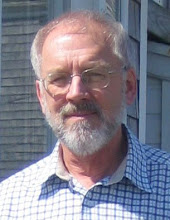
Harry Daves

Harry Daves was a Texan of the old school. He was cranky and persistent, but modest and respectful. Nevertheless, the language heard in his living room could drop a Yankee's jaw. It did mine. He loved history, but his modest education, or maybe it was the cranky persistence, kept him at odds with the more formal historians of his section of Texas. So it seemed to this visitor from the north.

Harry contacted me the first time when he heard there was a Yankee poking around the local libraries, museums, and woods, trying to find the lost gravesite of his ancestor, Samuel Barber. Local historians advised me that Harry wouldn't have much to help my search, but they were wrong--Harry had more than all the others put together. He had long been interested in finding Samuel's grave but had not succeeded. He had interviewed everyone he could find who had seen it, none more recently than the 1960s. The site was deep in the woods of East Texas and any marker had long since disappeared. On a collection of paper scraps Harry had notes from each, describing what each knew. One knew on whose tract it lay. Another knew it was north of such and such fence, but south of another. It was in the woods but the prairie was visible. No piece of information alone was sufficient, but in aggregate they could narrow the possibilities to a radius of a few hundred feet. Harry also knew the hunters who knew the woods and who would join us in a sweep of the area and, better yet, guarantee we could find our way out.

We made multiple sweeps until we were convinced we found Samuel's gravesite. See the detailed description here.
Harry in his trademark red coveralls with Neale Rabensburg, Gayla Tilton, Mike Pomykal; 1994.


Thank you, Harry.

Tuesday, February 24, 2009

Thank you, Pappy!

I was born in Chicago and was raised in Alaska and Idaho. I'm a thorough Yankee. Not so my ancestors. Six generations of them lived in Texas, but I never set foot in the state until I was an adult. Since I became interested in family history I have visited often--twice a year, even. When I do, I exclaim "Thank you, Pappy!"

It was Pappy, my grandfather, who moved the family from the dustbowl of west Texas to Sandpoint, a lakeside logging town in the mountains of northern Idaho. I love Texans, I love my kin there, I love to walk the land my ancestors owned, but--no offense, please--it's too bad they're all in Texas. It's hot, humid, and flat; or dusty and flat; or mountainous (if you know where to look) and dry.

I'm sure Pappy received the same reaction I do at the mention of Idaho: "Huh? You like potatoes?" Or they confuse it with Iowa. Logging drew Pappy to Sandpoint, but the lake in the summer and the skiing in the winter drew me to the same town. We're a little isolated--six hours by car to Seattle, nine hours by air to Houston, and three hundred miles to the nearest potato patch--and that's how I like it.

Thank you Pappy!

Wednesday, February 4, 2009

The Old Man

I wrote this short essay in December 2005. Kent Gardien, the "Old Man," died June 26, 2006. Progress on the book mentioned is at Kokernot book.

In November I visited an old man in Cuernavaca, Mexico. Cousin Barbara Jo Brothers and I went with the sole purpose of meeting him, yet I had the feeling that I already knew him, and even that I was seeing myself twenty or thirty years hence. He was extremely frail and only once in my five visits did he rise from his chair, using a walker to make his halting way to the adjacent room where we took dinner.

I felt like I knew him because I’d followed his tracks for a decade. We think alike. We were chasing the same ancestor. I counted as victories the rare times I discovered something he didn’t know, or even visited an archive that didn’t already have his name in the visitors’ log. And I saw myself in him because he had done what I feared doing. He accumulated a huge amount of knowledge about his family—our family—which will go to his grave with him, untold. The last thing he published on the topic was thirty-five years ago.

His tracks ended twenty years ago. I assumed he was dead until a cousin asked me “Why don’t you just give him a call? Here’s his number.”

Soon I was settled into a hotel three cobblestoned blocks from his home in the oldest part of an old city. Each morning I rang his doorbell at the hour designated, usually eleven, and left when invited to leave, usually at two. In between we sat in his upstairs library overlooking Fray Bartolome De Las Casas and he told wonderful stories. Stories of growing up a child of wealth in depression Texas. Stories of his (great-grand) “Aunt Gus” and “Aunt Beck,” both sisters to my own third-great-grandmother, Elizabeth, born in New Orleans in 1831. Stories told him by his (grand-) “Uncle Walter,” who grew up in the home of his own grandparents, David and Caroline Kokernot, who in turn told of the death of David’s father, a waterborn Jewish peddler, on Lake Pontchartrain in the 1820s.

The old man was unpredictable. “I’ll never remember these stories. May I tape record them?” “NO!” “May I take your picture?” “NO!” “I can’t take notes fast enough. May I copy these papers?” “Why don’t you just take them all with you?” When I left town it was with forty pounds of paper in the overhead bin, which paper has been deposited at the archives of Gonzales County, Texas.

And I left with a determination to finish what the old man started and what I started: a published history of our family. Of course it’s made more difficult by all the new information he’s given me, but it will be better for it.

Saturday, January 31, 2009

The Smell of Old Paper

Yes, online research is convenient and it gets better as more original source documents become available online every year--see my previous post for an example. But research conducted only with online resources or secondary documents is incomplete. Besides, researching original documents is just more fun and satisfying. First, there's the chase. You cannot flit around the world at the speed of Internet Protocol packets to find documents that exist only on paper--you must find them the old fashioned way, maybe by telephone, more likely by letter or personal travel. The most valuable documents, of course, are the ones no one else has studied because they are not indexed or even catalogued. Second, there is a pleasure in handling documents one, two, three centuries old. Their smell is unique, not musty--they've been in a climate controlled room--but pleasant. Then there is the penmanship. Few today can equal it, certainly not I. Third, there is that moment when you learn something that you're certain no one else in the world knows. Sure, maybe almost no one else cares, but someone does.

David Kokernot said, and many writers have repeated, that he served as an officer chasing smugglers in the Gulf of Mexico in the 1830s. He would have worked for the Collector of Customs in New Orleans who, in turn, worked for the Treasury Department in Washington. After a year spent searching for the federal documents that would be generated by that activity, I found correspondence between those two offices resting in a field office of the National Archives in Fort Worth, Texas. No amount of phone calls or emails had produced a catalog of the collection, which fills many boxes, until I walked into the archives on October 30, 2006. That catalog, which resided in the computer of one archivist at the time, nowhere else, saved me days of work.

David Kokernot did sail with the Revenue Cutter Service--once. The history of his service can be pieced together by careful examination of those correspondence files. Pictured here is just one letter between Washington and New Orleans that mentions charges against Kokernot and the officers of the Revenue Cutter Ingham. You'll have to go to Ft. Worth or buy my book to learn the rest of the story. Sorry, the book is not available yet, but here is a record of my progress on it.

Monday, January 26, 2009

Historical Research in Amsterdam

Here is an example of research, not frivolous, that can be done entirely online. It yields information, including photographs, providing color and context to light up descriptions of the Kokernot's family life in Amsterdam. It requires finding an address (in this case, of David Kokernot's mother's family), or at least a street; finding that location on an old map; and finding actual drawings from the time and photographs of the neighborhood with the original houses still standing.

An online source is the "name adoption registers." The Dutch were among the last western Europen countries to insist on hereditary surnames. Many used them already, but others, especially Jews, used a patronymic instead--their given name plus their father's given name. In 1812 all citizens were required to register their surnames. That document provides a snapshot of the family--parents, grandparents, children, even married daughters acquiring a maiden name--and included their address. An online database for Jewish Amsterdammers is here. Click "Search" at the top of the page and enter "Beugel" in the "New Adopted Name" box (David's mother's family adopted the name "van der Beugel"). A couple dozen names pop up, almost all kin to David's mother, who is "Beletje" on the last page, archive number 57C. Clicking on her shows her address as "lange Houtstraat," a street only two blocks long. The document for Betsy's (as we call Beletje) brother, Salomon, gives an actual address in archive number 81vB on the first page. He's at lange Houtstraat 8, which may be the same house or a different one, but in any case they are no more than two blocks apart.

Where was 8 lange Houtstraat? Modern maps are no help because the street no longer exists. A street map of Amsterdam from 1795 is available online at the city archives. Put 010094000928 into the search box and press "Zoek." Click on the only resulting map and zoom in to the small island at the coordinates between C and D and e and f. This is the Jewish Quarter. Lange Houtstraat bisects the small island and Korte Houtstraat (shown, but not named) bisects it again at right angles. A description of the Jewish Quarter around 1600 is here. Scroll down to "The First Meeting House."

What did the neighborhood and house look like? Again the Amsterdam Archives help. Enter 5221BT909307 into the search box for an architectural drawing of 8 Lange Houtstraat in 1885 and 010003012159 for a photograph of the street in 1930. Number 8 is the narrow building, two windows wide, on the near side of the large building on the corner. Zoom in if you are uncertain the building is over a century old and was the home of the van der Beugels in 1812.

This neighborhood was thoroughly cleared out during World War II and the city began tearing down the buildings in the 1950s. Amsterdam consumed two more decades deciding exactly what to place on the site. The canals on two sides of the island had been filled during the nineteenth century and have since been used as a popular flea market, the Waterlooplein. The streets Lange Houtstraat and Korte Houtstraat today underlay the city's new Opera House, visible on Google Earth at lat/lon 52.3674, 4.9015.

Countless hours can be squandered in the Amsterdam Archive's site searching for old photographs and sketches. High quality scans are available and they can be published with payment of a permissions fee.

Sunday, January 25, 2009

Why this blog?

Technorati reported last summer that there were then 112 million blogs on the web. Surely we need one more, huh? Enough friends and strangers have asked when my biography of David Levi Kokernot will be available (bless 'em) that I hope this blog will help maintain their interest long enough to buy one when it's available. I'm also counting on my public exposure of my progress to temper my procrastination a little, thus improving that progress. It's here.

Still, I'm proud of my procrastination creativity, so I plan detail a few from time to time.

One of my favorite procrastinations is research. Not the serious, go-to-the-archives kind, but frivilous research. I easily spent twenty minutes trying to find a better number for the worlds' blogs to use in the opening sentence of this blog. That's frivilous. But I have learned a heck of a lot about historical research in my work on this biography, and I want to share some techniques and locations. I have more to learn, too. Please share yours with me, frivilous or otherwise.